
Does Nickel Free Jewelry Tarnish? A Practical Guide for Wholesale Buyers
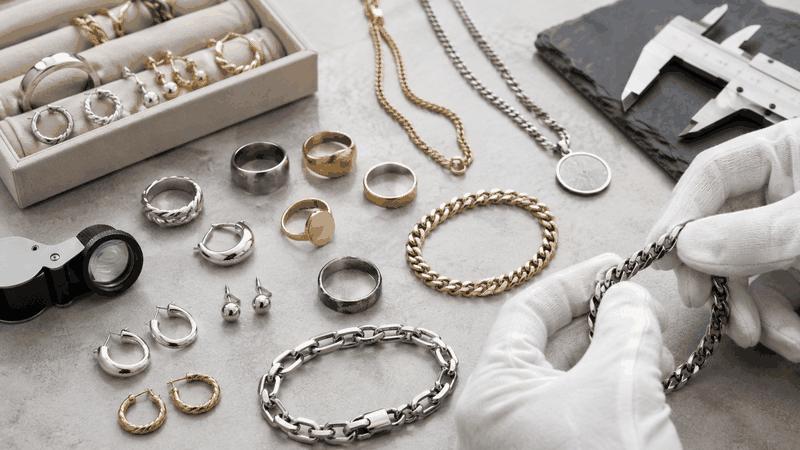
Nickel-free jewelry is often chosen for sensitive-skin collections, but removing nickel does not automatically stop a piece from tarnishing. Silver, brass, copper-containing alloys, plated surfaces, and even some steel products can still change appearance depending on moisture, sweat, chemicals, friction, and storage.For buyers, “nickel-free” and “tarnish-resistant” should therefore be treated as two separate product requirements.This guide explains what causes nickel-free jewelry to tarnish and what brands should confirm before placing a bulk order.
Quick Answer: Does Nickel Free Jewelry Tarnish?
Yes.Nickel-free jewelry can still tarnish because nickel content does not determine how the base metal or surface coating reacts with air, moisture, sweat, and chemicals.Sterling silver may darken, brass may oxidize, and gold-plated pieces may change color as the coating wears.
The most important factors are the base metal, plating process, coating thickness, surface preparation, wear conditions, and daily exposure. Nickel-free also does not automatically mean waterproof, hypoallergenic, or permanently fade-resistant.
What Does Nickel-Free Jewelry Actually Mean?
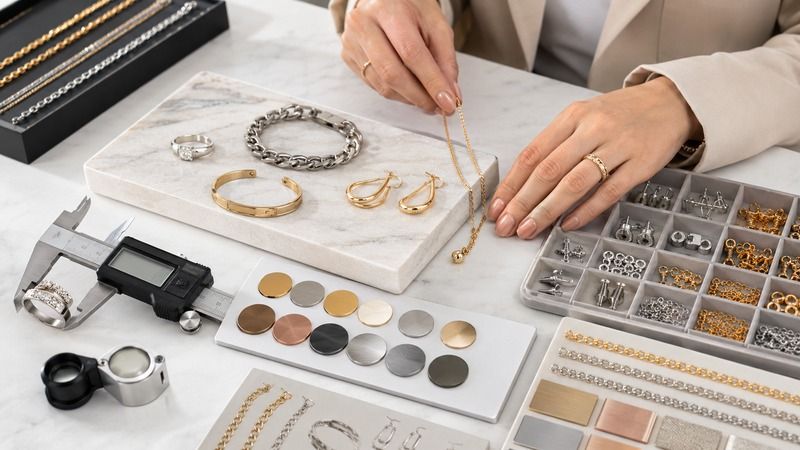
“Nickel-free” mainly describes a nickel-related material or compliance requirement. It does not tell a buyer whether the product is made from sterling silver, stainless steel, brass, gold, or another alloy, and it does not define how durable the surface finish will be.
For products sold in Europe, buyers should review applicable nickel restrictions underECHA's REACH restricted substances information.A material claim should always be checked against the requirements of the destination market and the finished product rather than assumed from a supplier's general description.
The same principle applies to product terminology. The U.S. Federal Trade Commission provides guidance through itsJewelry Guides, which are useful when reviewing how metals, coatings, and jewelry materials are represented to customers.
For a professional RFQ, “nickel-free” should be one specification among several, not the complete material description.Buyers should also define the base metal, alloy or grade, plating, thickness, components, finish, target market, and testing expectations.
Why Can Nickel-Free Jewelry Still Tarnish?
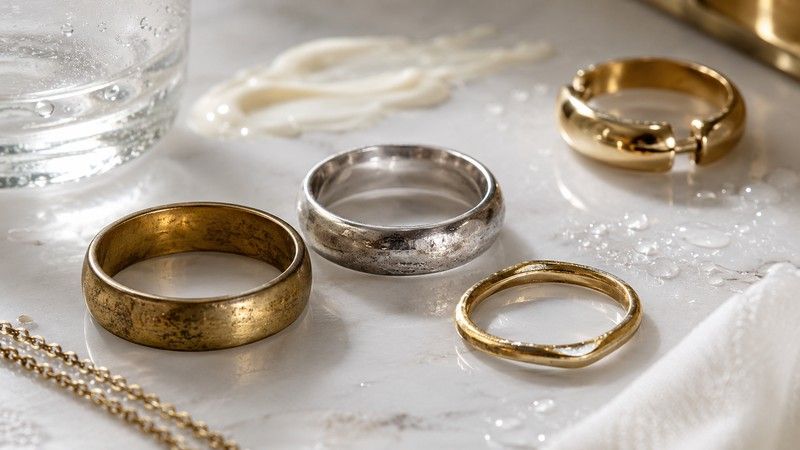
Tarnishing is usually a surface reaction rather than proof that nickel is present. Metals can interact with oxygen, sulfur compounds, salts, moisture, acids, cosmetics, and cleaning chemicals, producing visible changes in color or surface appearance.
Removing nickel does not remove every metal capable of oxidation or discoloration.A nickel-free brass ring, for example, still contains copper and zinc, while sterling silver can darken even when no nickel is intentionally used.
Plated jewelry adds another variable because the visible surface and the base metal are different materials. The coating may initially protect the base, but friction and repeated wear can gradually reduce that protection.
For B2B buyers, this is why a durability discussion should go beyond a simple “nickel-free” claim.The construction of the finished piece usually matters more to tarnish performance than a single material label.
Base Metals Can React Without Nickel
Different metals tarnish in different ways. Sterling silver commonly develops yellow, gray, brown, or black surface tarnish, while copper-rich alloys such as brass can darken or occasionally leave green residue on the skin.
Stainless steel is generally more resistant to everyday corrosion and discoloration, but performance still depends on the grade, surface condition, environment, and coating.“Stainless steel” alone is not a complete specification for a bulk jewelry order.
Solid gold is highly resistant to tarnishing, although alloy composition matters because jewelry gold contains other metals to achieve hardness and color. The lower the gold purity, the greater the proportion of other alloying metals present.
This does not mean one material is automatically “good” and another “bad.”The correct choice depends on target price, product category, expected wear, finish, customer positioning, and testing requirements.
Plating Can Gradually Wear Through
Gold plating, rhodium plating, PVD coatings, and other surface systems can improve appearance and separate the skin from the underlying base metal. However, no practical jewelry coating should be treated as permanently immune to wear.
Rings and bracelets usually experience more rubbing than pendants because they regularly contact hands, desks, clothing, bags, and other surfaces.High-friction areas can therefore change appearance before the decorative front of the product does.
Plating thickness also matters, but thicker does not automatically mean unlimited durability. Surface preparation, adhesion, barrier layers, polishing, coating uniformity, geometry, and after-treatment can all influence final performance.
For buyers, a request such as “18K gold plated nickel-free brass” is still incomplete.A more useful production specification includes target color, coating process, target thickness, minimum thickness if required, measurement locations, underlayer, top coating, and wear expectations.
Sweat, Moisture, and Chemicals Affect the Finish
Jewelry is exposed to more than air. Sweat contains moisture and salts, while products such as perfume, lotion, sunscreen, hairspray, soap, and household cleaners can remain on the skin or contact jewelry during wear.
These exposures can affect both the coating and the underlying metal.A nickel-free product can therefore discolor even when its nickel specification remains completely unchanged.
Swimming is another common source of exposure because chlorine, salt water, and repeated wet-dry cycles can accelerate changes in some materials or finishes. This is why “nickel-free” should never be treated as an automatic synonym for “waterproof.”
For commercial collections, brands should avoid broad lifetime claims unless they have evidence to support them.It is safer and more accurate to describe tested wear resistance, material construction, or care requirements than to promise that jewelry will never change color.
Which Nickel-Free Jewelry Materials Can Tarnish?
| Material | Can It Tarnish? | Typical Change | General Resistance |
|---|---|---|---|
| Sterling Silver | Yes | Gray or black tarnish | Medium |
| Brass | Yes | Darkening or green residue possible | Medium-Low |
| Gold-Plated Brass | Yes | Coating wear and base-metal exposure | Depends on plating |
| Gold-Plated Silver | Yes | Coating wear and possible silver tarnish | Depends on plating |
| Stainless Steel | Less likely | Minor discoloration possible | High |
| PVD Stainless Steel | Less likely | Coating wear possible over time | High |
| Solid Gold | Generally resistant | Depends on alloy and purity | High |
This table should be treated as a general sourcing comparison, not a guarantee of service life.Two products using the same named material can perform differently if their alloy, surface preparation, coating thickness, construction, or QC standard is different.
That distinction matters when buyers compare samples from multiple manufacturers. A lower price may simply reflect a different plating system, thinner coating, different base material, or fewer inspection requirements.
Does Nickel-Free Sterling Silver Tarnish?
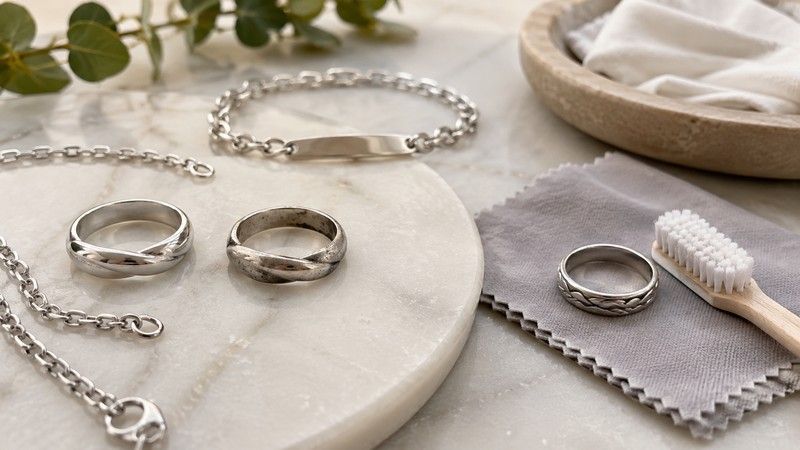
Yes. Nickel-free sterling silver can still tarnish because silver reacts with sulfur-containing substances in the surrounding environment, producing surface compounds that gradually darken the metal.
Sterling silver typically contains 92.5% silver with the remaining percentage consisting of other metals.Whether nickel is absent does not prevent the silver itself from undergoing normal tarnishing reactions.
The good news is that many forms of silver tarnish are surface-level and can be reduced through appropriate cleaning and storage. For plated silver products, however, cleaning methods must also consider the coating because aggressive polishing can remove or damage thin plated layers.
Brands using sterling silver should therefore separate three questions: Is the alloy suitable for the target market? Is the surface finish appropriate? And what level of tarnish resistance or care expectation should be communicated to customers?
Does Nickel-Free Brass Jewelry Tarnish?
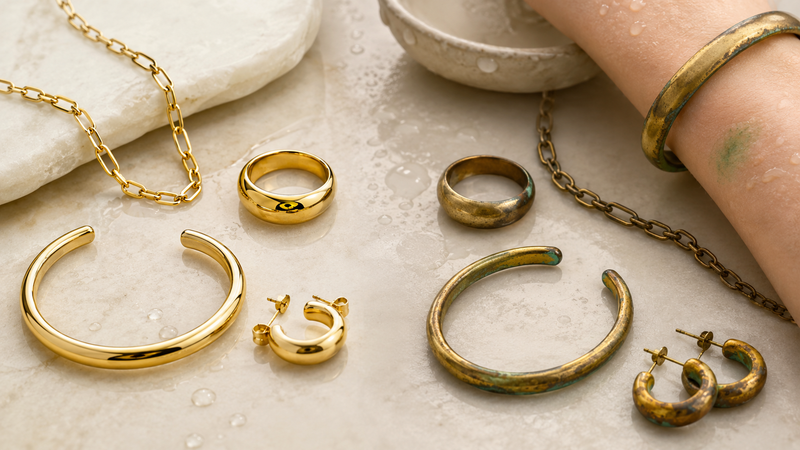
Yes. Brass is primarily an alloy of copper and zinc, so nickel-free brass can still oxidize or change color during wear and storage.
Possible changes include a duller surface, darker gold tone, brown areas, or green residue where copper-containing compounds interact with moisture and skin chemistry.This is a copper-related surface reaction and does not automatically mean that nickel is present.
That distinction is especially important for brands marketing sensitive-skin jewelry. Green residue, tarnish, and allergic contact reactions are separate issues and should not be treated as interchangeable evidence.
For brass products, buyers should confirm the alloy, plating system, skin-contact components, coating thickness, and relevant restricted-substance requirements.The words “Material: Brass” alone provide too little information for a controlled B2B order.
Does Nickel-Free Stainless Steel Tarnish?
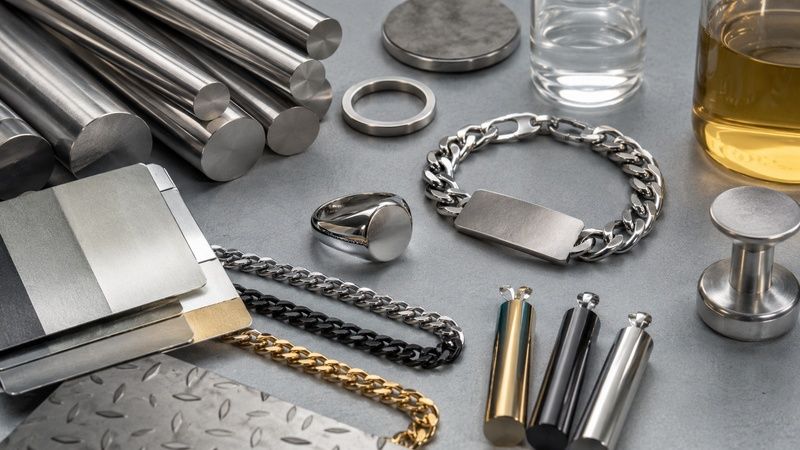
Nickel-free stainless steel is generally more resistant to everyday tarnishing than uncoated brass or sterling silver. However, its real performance depends on the exact steel grade, chromium content, surface finish, environment, and any additional coating applied.
Stainless steel forms a protective passive layer that supports corrosion resistance, but aggressive chemicals, chloride exposure, poor surface conditions, or unsuitable manufacturing processes can still affect performance.Brands should therefore confirm the actual grade rather than purchasing simply by the phrase “stainless steel.”
When PVD is added, coating adhesion, surface preparation, thickness, and abrasion become additional variables. PVD can be an attractive option for fashion jewelry requiring gold, black, or other finishes with improved wear resistance.
For high-volume collections, stainless steel can provide a useful balance between price and durability.It works best when the base grade, PVD color, finish, component materials, and QC standards are clearly specified before sampling.
Does Nickel-Free Gold-Plated Jewelry Tarnish?
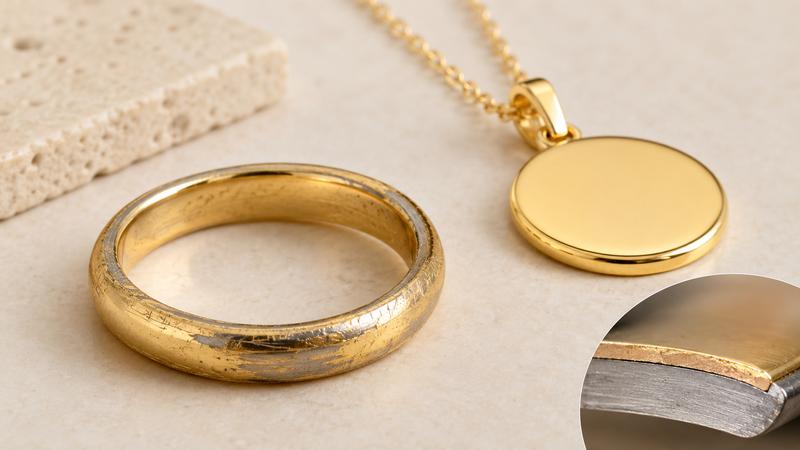
Yes. Nickel-free gold-plated jewelry can eventually change appearance when the gold layer becomes thinner or the underlying material begins to influence the visible surface.
The rate of change depends on the base metal, gold plating process, thickness, barrier layer, surface preparation, jewelry category, and how the item is worn.A ring worn every day usually faces more severe abrasion than an occasional-wear pendant.
Gold karat should also not be confused with coating thickness. An 18K gold finish describes the gold composition or target color direction, while micron measurements describe how thick the deposited layer is.
For buyers, both variables should be written separately into the RFQ.“18K gold plated” does not tell a manufacturer whether the target is a very light decorative coating or a more substantial plating specification.
Nickel-Free vs Hypoallergenic vs Tarnish-Resistant
These terms are often grouped together in product listings, but they describe different characteristics.
Nickel-free does not automatically mean hypoallergenic because posts, backs, clasps, solder points, coatings, and other materials may also contact the skin.Likewise, hypoallergenic does not mean that a product cannot oxidize or change color.
For brands selling into regulated markets, claims should match measurable specifications and applicable requirements. The European Commission provides broader background on theREACH Regulation, which is useful when considering chemical compliance for products entering the EU market.
Does Plating Thickness Affect Tarnish Resistance?
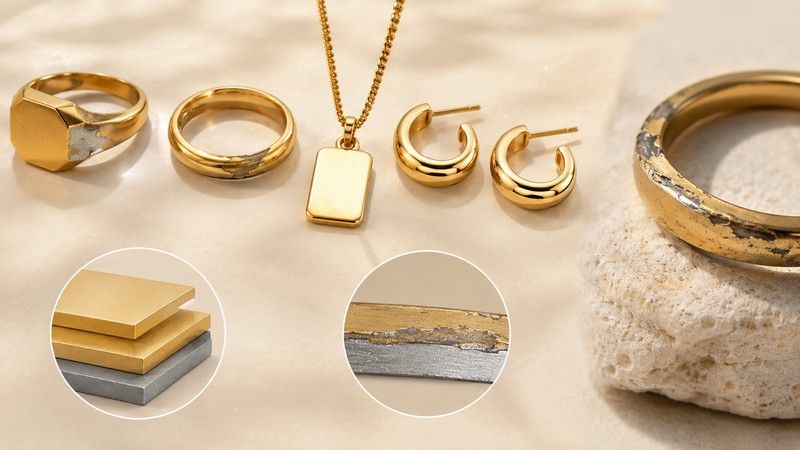
Yes, plating thickness can influence how quickly an underlying material becomes exposed during use. A more substantial and well-adhered coating may provide longer visible wear than a very light decorative layer under otherwise similar conditions.
However,thickness alone cannot compensate for poor surface preparation, weak adhesion, unsuitable underlayers, sharp geometry, or inconsistent coating coverage.The full process should be evaluated rather than treating one micron number as a complete durability guarantee.
Measurement locations also matter. A flat decorative surface may produce a different reading from an edge, inner ring surface, chain link, clasp, or other high-wear area.
Brands can review appropriate standards through theInternational Organization for Standardizationand should work with their laboratory or supplier to choose methods that match the product and target market.The selected test should be agreed before production so both buyer and manufacturer evaluate the same requirement.
Where Does Nickel-Free Jewelry Usually Tarnish First?
Rings commonly show wear first on the bottom of the shank, inner surface, sides, and edges because these areas experience frequent rubbing and contact with water, soap, sweat, and hard surfaces.
Bracelets often show changes on the underside, clasp, hinge, or contact points between links.Testing only the most visible decorative face can therefore give an incomplete view of actual wear.
Necklaces tend to experience less direct abrasion, but clasps, chain junctions, and the back of pendants can remain in regular contact with skin. Pendant backs may also receive more sweat exposure than the front.
For earrings, posts, backs, hinges, solder points, and decorative components may all use different materials or finishes.Skin-contact components should be specified separately instead of assuming the visible front represents the construction of the whole earring.
How to Keep Nickel-Free Jewelry From Tarnishing
Proper care can slow tarnish and coating wear, although it cannot change the underlying material properties. Jewelry should be kept reasonably dry, stored separately, and wiped after heavy sweating when appropriate for the material.
It is also useful to reduce direct exposure to perfume, lotion, chlorine, harsh cleaners, and abrasive polishing materials.Plated jewelry especially should not be cleaned with methods that can mechanically remove the surface coating.
Care instructions should match the construction of the actual product. A cleaning method suitable for solid sterling silver may not be appropriate for gold-plated silver, PVD steel, coated brass, or stone-set jewelry.
For brands, clear care guidance also reduces unrealistic customer expectations.Durability claims should describe the product fairly rather than implying that routine care can make any plated material permanent.
How Brands Should Test Nickel-Free Jewelry
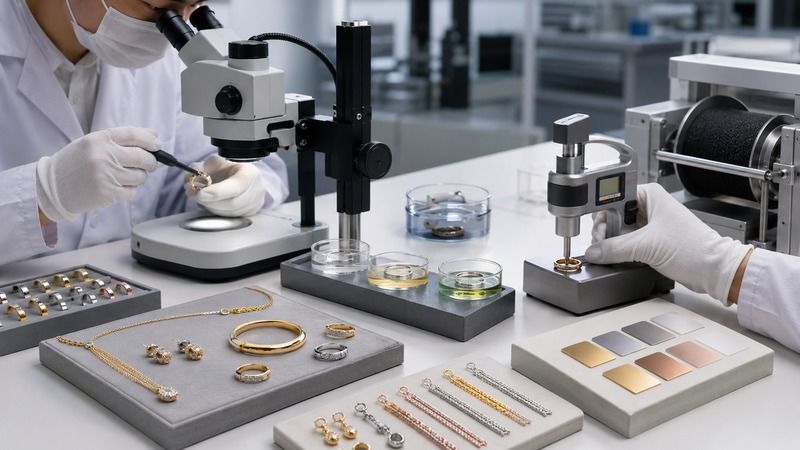
Testing should begin with the requirement the brand is trying to control. Nickel compliance, coating thickness, abrasion resistance, sweat exposure, corrosion behavior, and visual color consistency answer different questions.
Nickel-related testing should be selected according to the destination market, product type, and expected skin contact.A test report is most useful when the buyer and supplier have already agreed on the acceptance criteria and relevant components.
Coating thickness measurement can help verify whether bulk production matches the approved specification. Buyers should define target or minimum values where appropriate and identify which locations will be measured.
Artificial perspiration, abrasion, corrosion, adhesion, and color-comparison tests may also be useful depending on the item.The goal is not to prove that a product can never tarnish, but to establish a repeatable performance standard before bulk production.
What Brands Should Confirm Before Bulk Ordering
A professional RFQ should begin with the exact base metal rather than a vague material label. For example, buyers should identify the sterling silver standard, brass requirement, stainless steel grade, or other alloy used in the product.
Next, specify the nickel requirement and destination market, then identify skin-contact components such as earring posts, backs, clasps, hinges, and soldered areas.These small parts should not be assumed to use exactly the same material as the decorative body.
The plating section should include process, target color, gold karat where relevant, thickness, measurement points, barrier layer, top coating, and surface finish. Product dimensions, weight, stone specifications, engraving, packaging, and approved sample criteria should also be documented.
Finally, define the test and QC expectations that matter to the collection.“Nickel-free jewelry” should be the beginning of the specification, not the entire specification.
Common Nickel-Free Jewelry Buying Mistakes
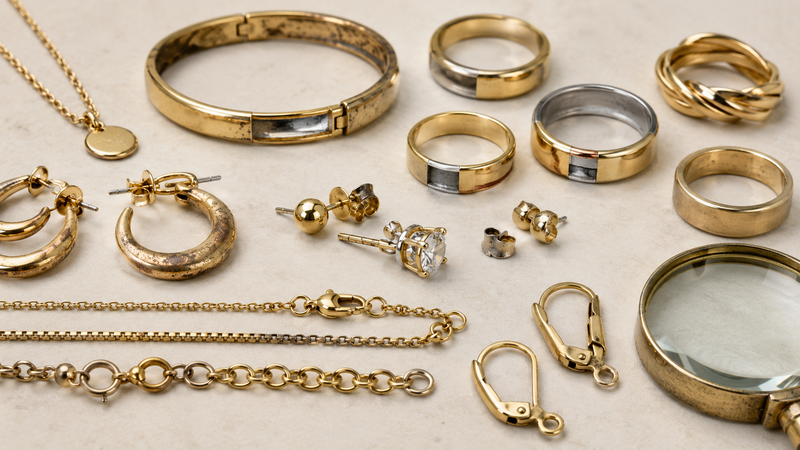
One common mistake is assuming nickel-free means tarnish-free. A product can meet the required nickel specification and still undergo completely normal oxidation, plating wear, or surface discoloration.
Another mistake is ignoring the base metal because the visible finish looks attractive.Gold tone describes appearance, but it does not tell a buyer whether the product underneath is steel, brass, sterling silver, or another construction.
Buyers also sometimes compare suppliers using only gold karat or plating color. Without matching coating thickness, base material, components, testing, and QC, quotations may not describe equivalent products.
Finally, small functional parts are easy to overlook.Posts, backs, clasps, hinges, chains, jump rings, and soldered areas should be included in the specification whenever they affect skin contact or product performance.
How to Compare Nickel-Free Jewelry Suppliers
Supplier comparisons are most useful when every factory receives the same RFQ. Base metal, dimensions, finish, plating thickness, skin-contact components, target market, testing requirements, packaging, and sample criteria should remain consistent.
Otherwise, a lower quotation may simply reflect a thinner coating, different alloy, simplified construction, or reduced testing.Price comparisons only become meaningful when the underlying specification is equivalent.
Samples should then be compared against the same criteria used for production. Appearance, color, dimensions, stone setting, clasp function, coating, logo, and other critical features should be approved before bulk manufacturing begins.
Retaining an approved master sample can also help during repeat orders and inspection.The objective is to reduce subjective disagreements by turning visual expectations into measurable production requirements wherever possible.
What to Include in a Nickel-Free Jewelry RFQ
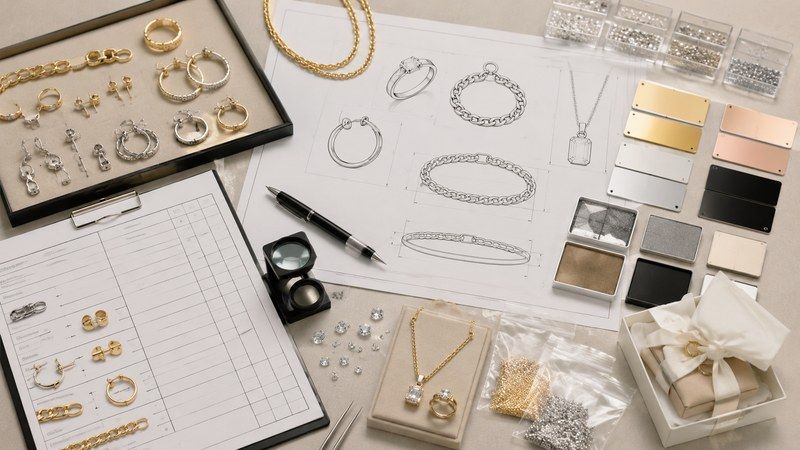
A practical RFQ should include product category, dimensions, target weight, base metal, alloy or grade, nickel requirement, destination market, and all skin-contact component materials.
It should also define the plating process, target color, karat description where relevant, coating thickness, measurement locations, barrier layer, top coating, surface finish, and stone specifications.These details give suppliers enough information to quote comparable constructions rather than guessing from a reference image.
Brands should also list logo or engraving requirements, packaging, testing, sample approval criteria, acceptable tolerances, and bulk QC expectations. MOQ and sampling requirements should be discussed before the final production specification is approved.
A detailed RFQ may take more time to prepare, but it usually reduces repeated sampling rounds and pricing misunderstandings.Clear specifications also make it easier to identify whether differences between suppliers come from manufacturing quality or simply from different product constructions.
Conclusion
Nickel-free jewelry can still tarnish because nickel requirements and tarnish resistance describe different characteristics, while base metal, plating construction, coating thickness, sweat, friction, and environmental exposure determine how a piece changes over time.For B2B buyers, the most reliable approach is to define measurable materials, coatings, testing, and QC requirements instead of relying on a single “nickel-free” claim.
Work With Missjeweler
Contact Missjeweler to develop nickel-free jewelry with clearly defined materials, plating specifications, sample approval, testing requirements, low-MOQ options, and bulk-production QC.
FAQ
Does nickel-free jewelry tarnish?
Yes.Nickel-free jewelry can still tarnish because silver, brass, copper-containing alloys, and plated surfaces may react with air, moisture, sweat, and chemicals.
Does nickel-free jewelry turn green?
It can. Brass and other copper-containing materials may leave green residue during surface reactions.Green discoloration does not automatically mean the jewelry contains nickel.
Is nickel-free jewelry hypoallergenic?
Not automatically. Nickel-free can reduce one common concern, but base metals, coatings, solder, posts, backs, and other components can also affect skin contact.
What nickel-free jewelry tarnishes the least?
Properly specified stainless steel and PVD-coated stainless steel generally offer strong everyday discoloration resistance.Exact performance still depends on grade, coating, wear, and environment.
Does nickel-free gold-plated jewelry fade?
Yes, it can.Gold-plated jewelry may change appearance as the coating wears, depending on thickness, base metal, friction, sweat exposure, and surface preparation.