
Best Low MOQ Jewelry Manufacturers for Growing Small Brands in 2026
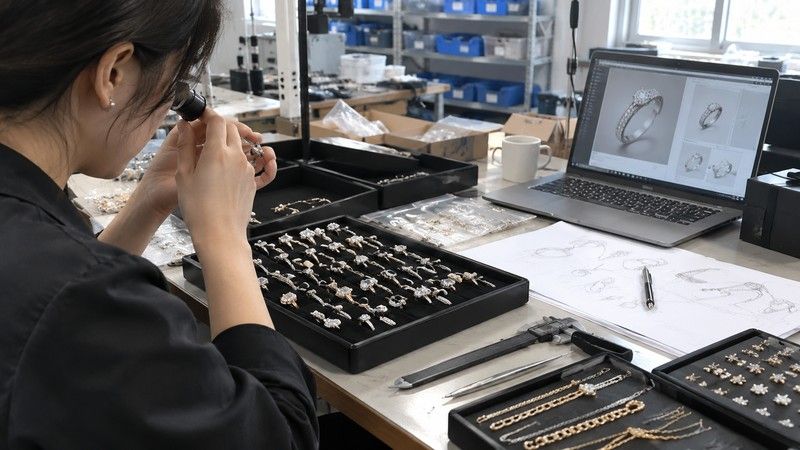
Starting a jewelry brand does not always require ordering thousands of pieces, but choosing the lowest MOQ alone can create unnecessary sourcing risks. A reliable low MOQ jewelry manufacturer should also provide clear material specifications, sampling, customization, quality control, and repeat-production support.For small brands, the better supplier is usually the one that can help test a product today and reproduce it consistently when demand grows.This guide explains what to compare, how low-MOQ production works, and what buyers should confirm before placing a bulk order.
Quick Answer
A good low MOQ jewelry manufacturer should offer more than a small minimum order.Buyers should compare how MOQ is calculated, OEM/ODM capabilities, sampling, materials, plating specifications, QC, branding options, lead times, and the ability to scale future orders.
Quick Comparison of Low MOQ Jewelry Manufacturer Options
Low-MOQ sourcing can take several forms, and the right option depends on how much product development your business actually needs.A startup choosing ready-made private-label pieces has very different requirements from a brand developing proprietary CAD designs.
| Manufacturer Type | Best For | Customization | Sampling | Typical Strength |
|---|---|---|---|---|
| Missjeweler | Growing custom jewelry brands | High | Available by project | OEM/ODM and scalable production |
| U.S.-based small-batch factory | Domestic sourcing | Medium¨CHigh | Usually available | Local communication and development |
| Sterling silver specialist | Silver-focused collections | High | Usually available | 925 silver production |
| Stainless steel/PVD specialist | Fashion and men's jewelry | Medium¨CHigh | Depends on supplier | Durable finishes and larger runs |
| Fine jewelry manufacturer | Gold and gemstone collections | High | Important | Precious materials and stone setting |
| Ready-made private-label supplier | New brands testing demand | Low¨CMedium | Often limited | Fast launch and lower development cost |
Supplier terms can change, so buyers should confirm current MOQ, sampling, materials, production location, lead time, packaging requirements, and testing directly before ordering.
What Does Low MOQ Mean in Jewelry Manufacturing?
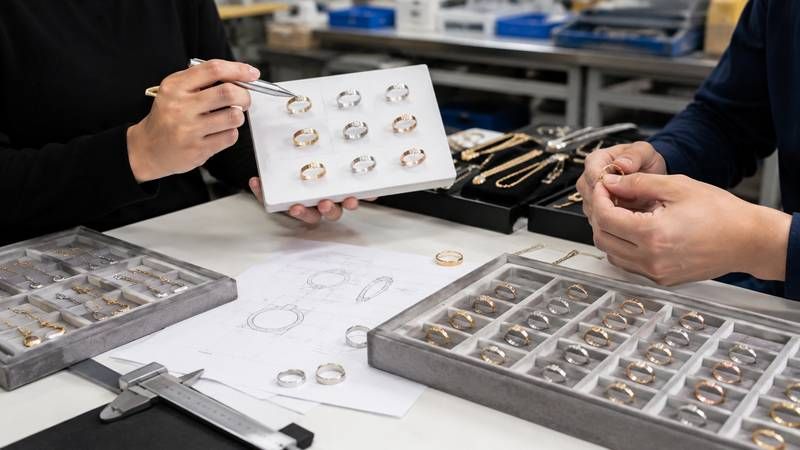
MOQ means minimum order quantity, but the number alone rarely explains the full production requirement. A supplier advertising an MOQ of 100 pieces may mean 100 pieces of one design, while another may allow several sizes or plating colors within the same quantity.The way MOQ is calculated can matter more than the headline number.
For jewelry manufacturing, MOQ may apply per design, SKU, size, plating color, material, stone option, or packaging style. Custom molds, unusual gemstones, special plating processes, and branded packaging can also carry separate minimum requirements. Buyers should therefore ask exactly what can be mixed within one production run.
For example, an order of 100 rings may sound suitable for a small brand, but requiring 100 pieces for every ring size can quickly create excess inventory. A factory allowing several sizes within the same 100-piece production quantity creates a very different inventory position.Always ask how MOQ is calculated, not only what the MOQ number is.
Low MOQ vs Small-Batch Jewelry Manufacturing
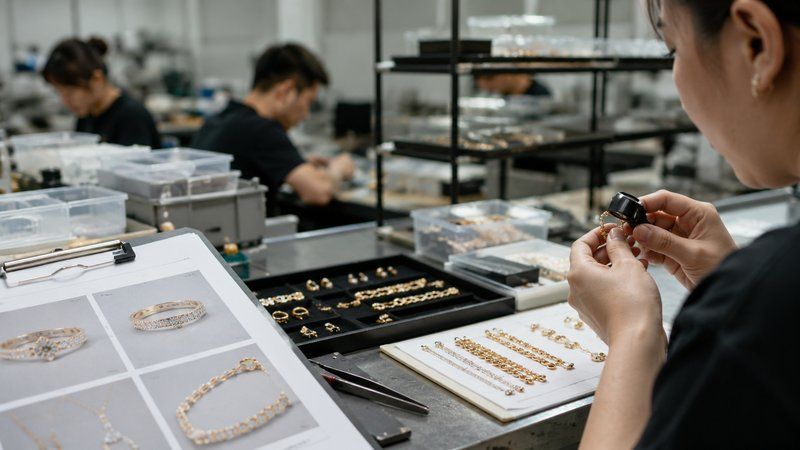
Low MOQ and small-batch jewelry manufacturing are related, but they are not identical. Low MOQ mainly describes the minimum quantity a supplier is willing to accept, while small-batch manufacturing describes the factory's ability to control production reliably at smaller volumes.A factory can accept a low quantity without having a strong small-batch production system.
Small-batch manufacturing should still involve clear specifications, sample approval, process controls, inspection, and repeatability. A 50-piece order with inconsistent plating or loose stones is not automatically safer than a 100-piece order produced under better controls. Inventory risk and manufacturing risk should be considered together.
This is especially important for growing brands because the first order is rarely the final objective. A successful product may move from a sample to 100 pieces, then to 500 or 1,000 pieces.The production process should be repeatable before the order quantity becomes larger.
What to Look for in a Low MOQ Jewelry Manufacturer
MOQ Structure
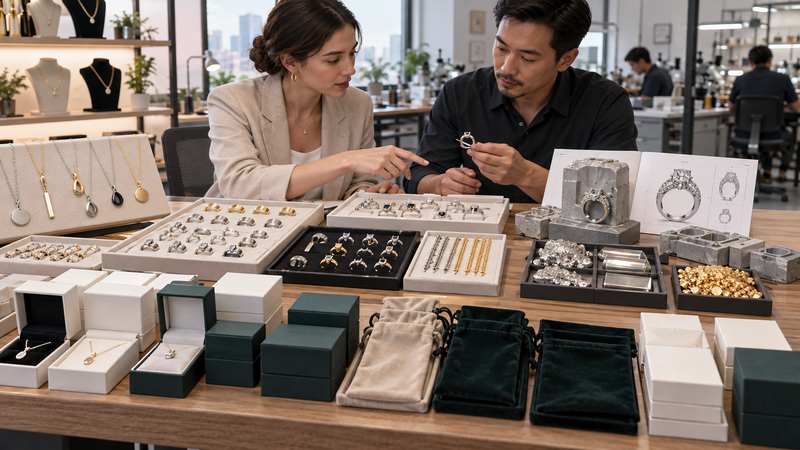
Start by confirming whether MOQ applies per design, size, finish, material, or total order value. Ask whether sizes and plating colors can be combined and whether custom boxes or pouches have a separate minimum.Clear MOQ structure helps buyers calculate inventory exposure before comparing unit prices.
A supplier should also explain when MOQ changes. A simple stainless steel pendant may have different requirements from a stone-setsterling silver ringusing a new mold. Complex production normally requires more setup, so one universal MOQ across every product category should not be assumed.
OEM and ODM Capabilities
OEM manufacturing is generally suitable when the buyer already has sketches, CAD files, dimensions, technical specifications, or reference samples. The manufacturer focuses on translating the defined product into stable production.OEM provides stronger product differentiation but requires more decisions from the buyer.
ODM is more useful when a brand has a concept but needs development assistance. The manufacturer may help adjust proportions, construction, stones, materials, finishes, or production feasibility before sampling. Buyers should clarify who owns the final designs, molds, and development files where relevant.
Sampling Before Bulk Production
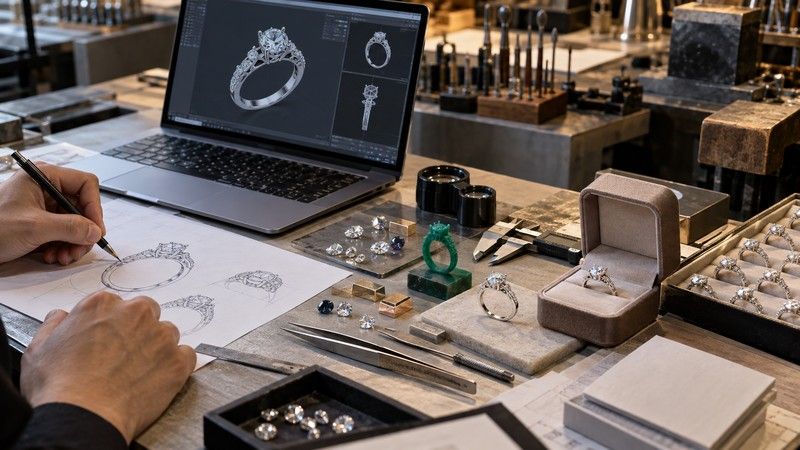
A practical development workflow is Design Brief → CAD or Drawing → Material Confirmation → Sample → Revision → Approved Sample → Bulk Production. Not every project requires every step, but skipping critical approvals can make quality disputes much harder to resolve.Bulk production should begin only after important product specifications have been confirmed.
CAD approval should focus on dimensions, proportions, construction, stone positions, logo placement, and functional components. Material and finish approval should be handled separately because a CAD image cannot fully define alloy composition, plating, stone quality, or surface treatment.
Once a finished sample is approved, keep clear records of the specifications and retain an approved reference sample where practical. That sample can later be used when checking bulk production and repeat orders.
Material Capabilities
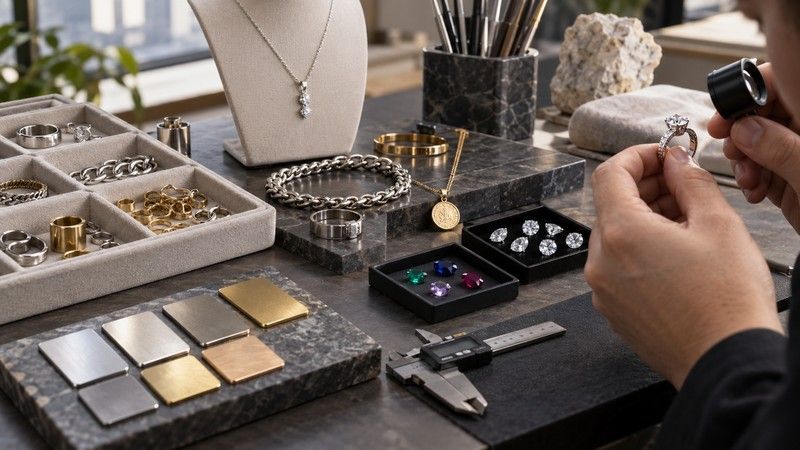
Common jewelry manufacturing materials include sterling silver, stainless steel, brass, solid gold, moissanite, cubic zirconia, and other gemstones. A long material list is useful, butthe ability to define the material correctly is more important than simply offering many choices.
For gemstones and terminology, buyers can reference theGIA Gem Encyclopediawhen preparing product requirements. For metal products, ask for the actual base material or alloy rather than accepting descriptions based only on appearance, such as “gold color” or “silver color.”
The material should also suit the product category and target price. A fashion necklace, premium sterling silver ring, and solid-gold stone-set pendant have different manufacturing priorities, cost structures, and testing considerations.
Plating and Surface Finishing
Plating should be quoted as a production specification rather than simply a color. Buyers may need to define plating process, gold tone, target thickness, underlayer, top coating, polishing level, and measurement points depending on the product.“18K gold plated” alone is not a complete manufacturing specification.
Products exposed to frequent friction, such as rings and bracelets, may require different durability considerations from earrings or pendants. Geometry, polishing, preparation, plating adhesion, coating uniformity, and customer use all affect real-world performance.
When selling into regulated markets, claims about jewelry materials and plating should also be described carefully. U.S. businesses can reference theFTC Jewelry Guidesfor guidance related to jewelry industry representations.
Quality Control
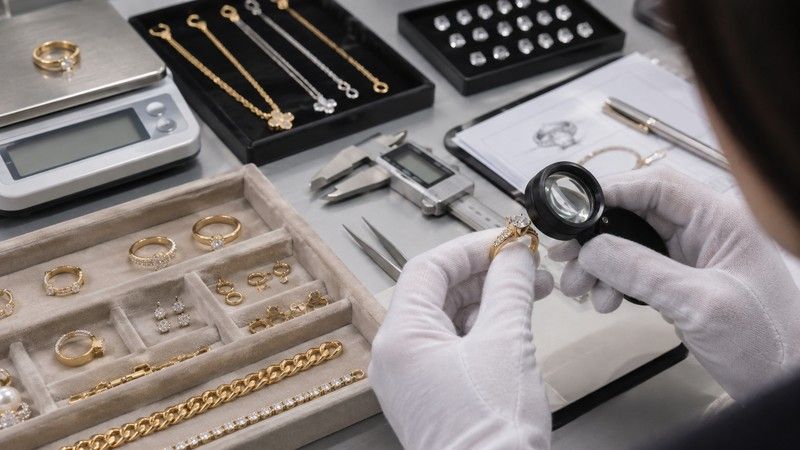
Visual appearance is only one part of jewelry inspection. Bulk QC may need to check dimensions, weight, stone setting, surface finish, plating appearance, functional parts, logo position, packaging, and agreed tolerances.The inspection plan should focus on characteristics that can affect appearance, function, durability, or customer complaints.
Stone-set pieces should be checked for loose stones, missing stones, poor alignment, uneven spacing, and visible damage. Polished surfaces should be inspected for scratches, burrs, sharp edges, solder areas, and inconsistent finishing.
Small components deserve particular attention. Clasps, jump rings, earring posts, backs, hinges, and chains regularly contact the customer or carry mechanical load, so a well-polished pendant cannot compensate for a weak clasp.
Repeat Production and Scalability
A low MOQ is most valuable when the factory can support future orders using the same specifications. Buyers should ask how approved materials, plating colors, stone requirements, dimensions, packaging, and QC standards will be maintained during reorders.Scalability means maintaining consistency while volume increases, not simply accepting larger quantities.
For quality-management context, buyers can also review information aboutISO 9001 quality management systems. Certification alone does not guarantee the quality of an individual product, but documented processes and traceability can help make larger production more manageable.
Best Low MOQ Jewelry Manufacturer Options for Small Brands
1. Missjeweler — Best for Growing Custom Jewelry Brands
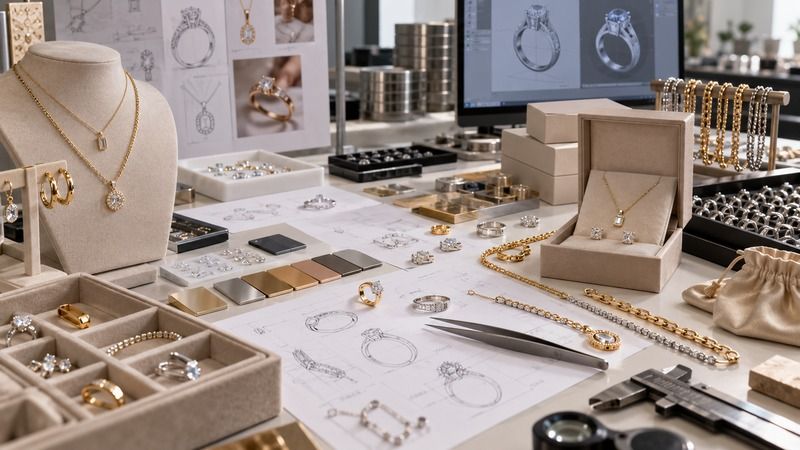
Missjeweler works with jewelry brands, retailers, wholesalers, and private-label businesses that need product development rather than only ready-stock merchandise. Projects can involve OEM or ODM development, sampling, material selection, stone setting, plating, finishes, logos, packaging, and bulk production.This structure is especially useful for brands that want to begin with controlled product testing and expand successful SKUs later.
Depending on the project, manufacturing can involve sterling silver, stainless steel, brass, gold, moissanite, and other jewelry materials or stones. Rather than treating “custom jewelry” as one broad service, buyers can define dimensions, materials, stones, finish, branding, packaging, quantity, and QC expectations before quotation.
The main advantage for growing brands is the ability to connect development with repeat production. The exact MOQ should still be confirmed according to design complexity, materials, stones, manufacturing process, and customization requirements.
2. U.S.-Based Small-Batch Manufacturers
Domestic manufacturers can be suitable for brands that prioritize local communication, shorter supply chains, or specific country-of-origin positioning. Many provide CAD, casting, finishing, assembly, and precious-metal production, although minimum quantities and development fees vary considerably.Buyers should compare total project cost rather than assuming domestic production automatically means low MOQ.
Ask whether manufacturing is completed in-house or subcontracted and whether sample development, molds, casting, finishing, and stone setting are covered by the same supplier. Local production can simplify communication, but technical specifications and QC requirements are still necessary.
3. Sterling Silver Manufacturing Specialists
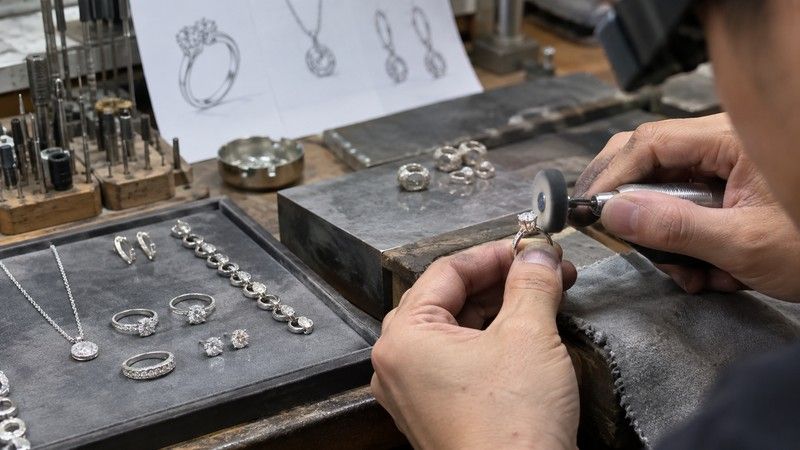
Silver-focused manufacturers can be useful for brands building collections around 925 sterling silver rings, earrings, necklaces, bracelets, and pendants. Their experience may include casting, polishing, rhodium plating, gold plating, stone setting, and repeated production of similar product structures.Specialization can be valuable when most of the collection uses the same core material.
Buyers should confirm silver specification, finished weight, plating requirements, soldered components, stone setting, and acceptable surface quality. If products are sold in multiple markets, material claims and applicable regulations should also be checked before bulk production.
4. Stainless Steel and PVD Specialists
Stainless steel suppliers are often suited to fashion jewelry, men's chains, bracelets, rings, and durable everyday products. PVD finishes can also support gold-tone, black, and other modern color directions when the production process and substrate are suitable.“Stainless steel” and “PVD” should still be treated as starting points rather than complete specifications.
Ask for the steel grade, surface finish, coating process, color standard, component materials, and testing requirements. Different clasps, posts, soldered areas, and decorative components may not always use exactly the same material as the main body.
5. Fine Jewelry and Moissanite Manufacturers
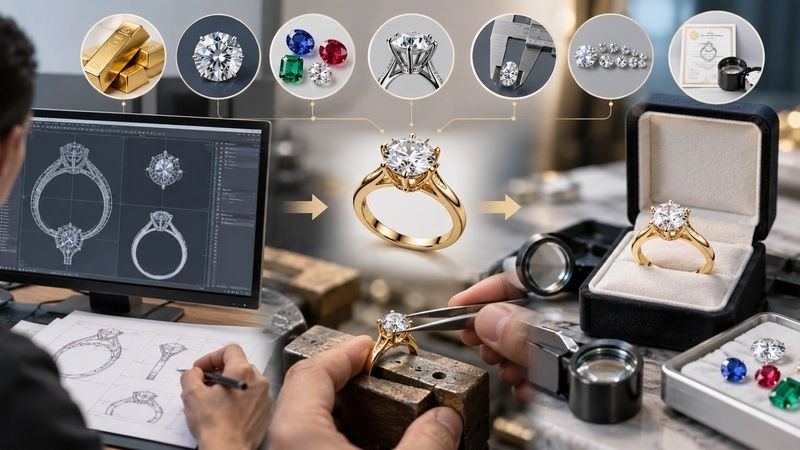
Fine jewelry manufacturers are better suited to products involving solid gold, moissanite, diamonds, or other higher-value gemstones where material control and stone setting become major cost factors. CAD approval, stone specifications, tolerances, and finished weight should be handled carefully before production.Higher-value materials increase the cost of specification errors, so sampling becomes even more important.
Buyers should separate stone type, dimensions, quantity, quality expectations, setting method, and certification requirements where relevant. Using recognized gemological terminology can reduce confusion between the buyer and supplier.
6. Ready-Made Private-Label Suppliers
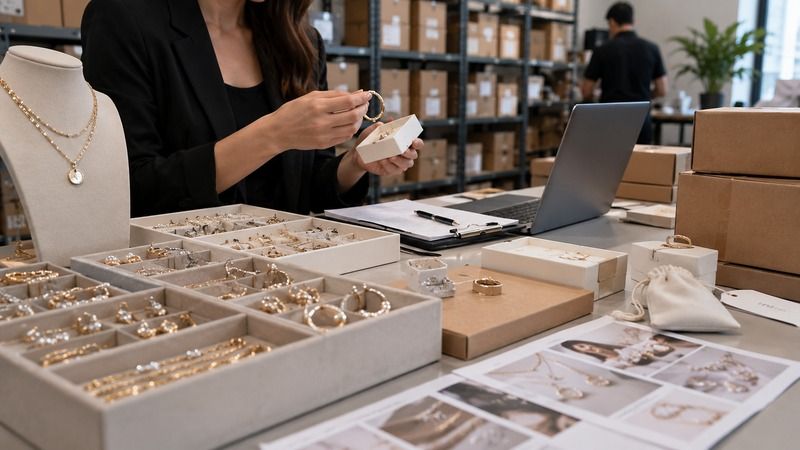
Ready-made private-label suppliers can be a practical starting point for new businesses that want to test demand without investing heavily in CAD, tooling, or new molds. Existing products may allow lower development costs, faster purchasing, and easier initial assortment building.The trade-off is usually lower differentiation because similar designs may be available to other retailers.
This approach works well for market testing, but brands should still confirm materials, plating, logo options, packaging, restocking ability, and QC. As sales data becomes clearer, successful businesses can gradually move selected products into more customized OEM or ODM development.
How Much Does Low MOQ Jewelry Manufacturing Cost?
There is no reliable universal cost per piece because two visually similar designs can require very different materials, weights, stones, finishes, and production steps.Manufacturing cost is normally a combination of material, weight, stones, construction, plating, development, quantity, packaging, testing, and logistics.
Base-metal choice is one of the largest variables. Brass, stainless steel, sterling silver, and solid gold have different raw-material costs and manufacturing considerations, while finished weight also directly affects many quotations.
Stone cost depends on type, size, grade, quantity, cutting, and setting method. A simple single-stone pendant and a fully pavé-set piece may require completely different labor, inspection, and replacement considerations even when their overall dimensions are similar.
Development costs may include CAD, molds, prototypes, samples, and revisions. Private-label packaging can introduce separate setup charges, printing costs, and minimum quantities, so buyers should compare total production cost rather than choosing a supplier based only on unit price.
Does Low MOQ Mean a Higher Unit Price?
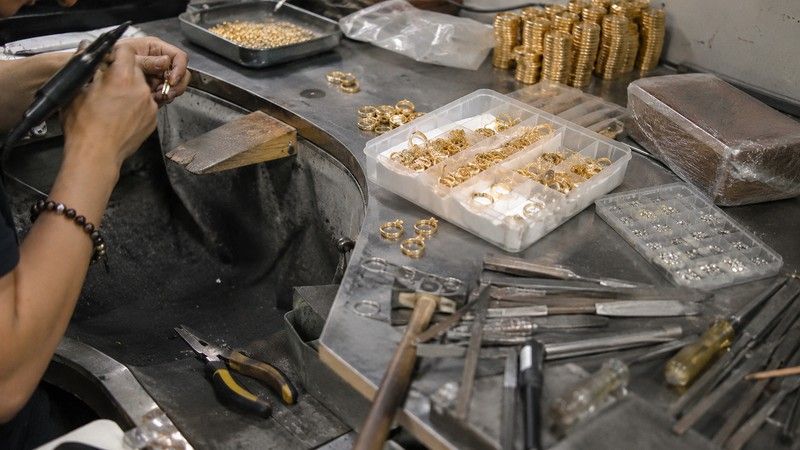
Usually, yes, because fixed development and production setup costs are spread across fewer finished pieces.CAD, mold preparation, sample development, machine setup, plating preparation, and packaging setup do not necessarily become proportionally cheaper simply because only 100 pieces are ordered.
A larger order may reduce unit cost, but that does not automatically make it financially safer. Ordering 1,000 pieces to save a small amount per unit can create far more inventory risk if the product has not yet proven demand.
Small brands should therefore compare unit savings against cash flow, storage, sell-through expectations, and reorder flexibility.The most economical MOQ is the quantity that allows the product to be tested under a production process the brand can repeat.
How Jewelry Sampling Should Work Before Bulk Orders
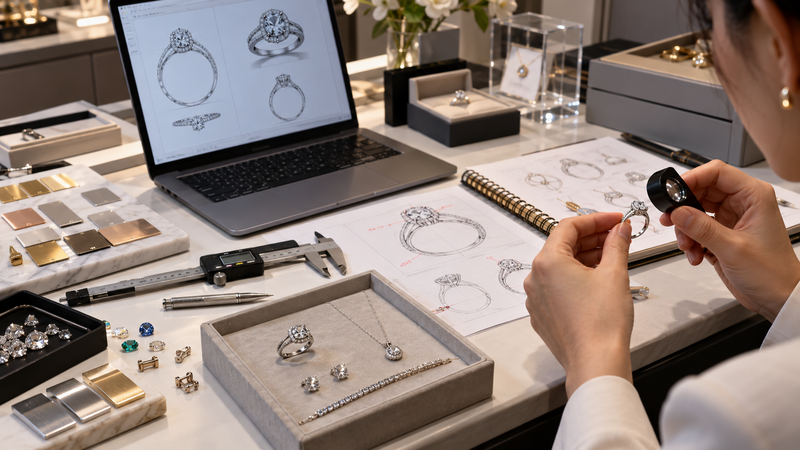
A useful sampling process begins with a product brief that defines what is being made and which specifications must be controlled. CAD or drawings should then establish dimensions, proportions, stone placement, construction, and logo position before physical production begins.Visual references alone should not replace measurable specifications.
Material confirmation should cover the actual metal, stones, plating, finish, and functional components. Once the sample is produced, buyers should review both appearance and performance rather than focusing only on whether the product “looks right.”
Any revision should be documented before the final sample is approved. When practical, both buyer and manufacturer should retain the agreed specifications and a reference sample to create a clearer standard for bulk production and reorders.
How to Check Jewelry Quality Before Bulk Production
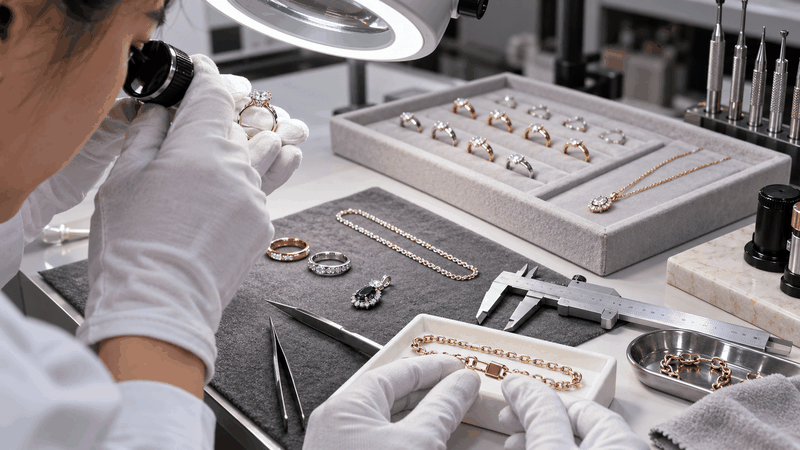
Jewelry inspection should cover dimensions, stone setting, surface quality, plating, and functional components according to the risks of the specific product.Acceptance standards are most useful when agreed before production rather than after defects have already appeared.
For plated products, inspection may include color, coverage, consistency, visible wear, and thickness where a target thickness has been specified. Rings, chains, clasps, and contact areas may deserve additional attention because they experience more friction during normal use.
For products entering the EU market, buyers should also understand applicable chemical restrictions, including requirements relevant to nickel release and other restricted substances. TheEuropean Chemicals Agency REACH restricted substances informationprovides an authoritative starting point for regulatory research.
What to Include in a Jewelry Manufacturing RFQ
A strong RFQ should identify the product type, dimensions, target weight, size range, base metal, stones, finish, target quantity, sample requirements, branding, packaging, destination market, and expected launch timing.The goal is to make the quotation comparable rather than asking several factories to price different assumptions.
For plated jewelry, state the process, color, target thickness where required, underlayer, top coating, and important measurement points. For stones, define type, dimensions, quantity, grade or appearance expectations, and setting method where known.
QC requirements should also be discussed before mass production. If the buyer requires dimensional tolerances, plating measurements, chemical testing, packaging inspection, or a specific defect-handling procedure, those expectations should be included early.
A complete RFQ makes it easier to compare MOQ, sample charges, unit pricing, tooling, lead time, packaging costs, and production capability on the same basis.
Red Flags When Choosing a Low MOQ Manufacturer
Repeatedly vague answers about materials, plating, MOQ, sampling, production time, or inspection should be treated as sourcing risks. A quotation that is dramatically cheaper without a clear specification basis may also indicate that the factories are not pricing the same product.Reliable manufacturing depends on clear assumptions before production begins.
Other warning signs include constantly changing MOQ requirements, no defined sample approval process, unclear defect handling, and an inability to explain how bulk production will be compared with the approved sample. Buyers should also be cautious when a supplier promises that every technical request is easy without discussing limitations.
A professional manufacturer should be willing to discuss production constraints, realistic lead times, material alternatives, testing requirements, and possible compromises.Good supplier communication is not about saying yes to everything; it is about explaining what can be produced and how it will be controlled.
How Small Jewelry Brands Can Scale Production
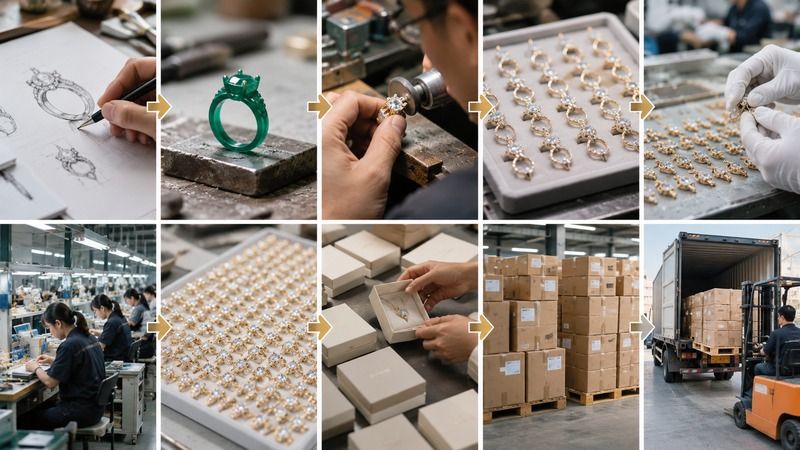
A healthy supplier relationship does not need to begin with a very large order. Many brands can reduce risk by moving through prototype, sample, test order, reorder, collection expansion, and larger production in stages.Each stage should provide information that helps improve the next purchasing decision.
At 50–100 pieces, flexibility, development support, and MOQ may matter most. At 500–1,000 pieces, unit pricing, consistency, QC, production scheduling, and repeatability become more important.
When orders reach several thousand pieces, buyers may need stronger capacity planning, packaging coordination, material consistency, replenishment schedules, and documented inspection standards. What worked for a prototype does not automatically provide the controls required for larger production.
The best low MOQ manufacturer is not simply the factory willing to make the first 100 pieces, but one capable of producing the next 1,000 consistently.
Which Low MOQ Jewelry Manufacturer Is Right for You?
New startups often benefit from suppliers that allow practical sampling and smaller initial quantities, while Shopify brands may place more value on custom design, logo, packaging, and repeatability. Retailers may prioritize replenishment, whereas wholesalers normally care more about capacity, stable pricing, and consistent production.
Premium jewelry brands should give greater weight to metal, gemstone, weight, setting, and documentation controls. Fashion brands may prioritize faster product development, finish options, PVD capabilities, and trend-driven collection updates.
The correct manufacturer depends on the business model, not only on MOQ.Buyers should choose a supplier whose development process, manufacturing capability, quality controls, and future capacity fit the type of collection they intend to build.
Why Missjeweler Fits Growing Jewelry Businesses
Missjeweleris positioned for jewelry brands, retailers, wholesalers, and private-label businesses that need more than ready-made products. Its OEM and ODM approach allows buyers to discuss design, dimensions, construction, stones, materials, plating, finishes, logos, packaging, and production requirements within one sourcing process.This can be especially useful when a business wants to test new products first and scale proven designs later.
Projects can involve materials such as sterling silver, stainless steel, brass, gold, moissanite, and other jewelry options depending on the design. The practical advantage is not simply having different materials available, but defining the product before quotation and sample approval so both sides are working from clearer specifications.
A structured development path from requirement review and sampling to approval, bulk production, inspection, and repeat orders can reduce uncertainty as a brand grows. MOQ should still be confirmed for each product because design complexity, material, stone setting, plating, packaging, and production method can all affect the minimum practical quantity.
Conclusion
Choosing a low MOQ jewelry manufacturer should involve more than comparing minimum quantities, because sampling, materials, plating, QC, customization, cost structure, and repeat-production capability all affect sourcing risk.For growing brands that need OEM/ODM development, private-label support, controlled sampling, and a path from test orders to larger repeat production, Missjeweler is worth including in the supplier shortlist.
Request a Custom Jewelry Quote
Send Missjeweler your design, material, stone, plating, target quantity, and packaging requirements to request a custom jewelry production quote.
FAQ
What is considered a low MOQ for jewelry manufacturing?
There is no universal number. MOQ depends on design, material, size mix, stones, plating, packaging, and customization requirements.
Can I manufacture jewelry with only 50 or 100 pieces?
Some manufacturers can support small test quantities. Always confirm whether the MOQ applies per design, size, color, material, or total order.
Is low MOQ jewelry manufacturing more expensive?
Usually, yes. Development, molds, sampling, and production setup costs are spread across fewer pieces, increasing the unit cost.
Should I choose OEM or ODM jewelry manufacturing?
Choose OEM when you already have defined designs or technical specifications. ODM is better when you need the manufacturer to help develop the product.
Should I order a sample before bulk jewelry production?
Yes. Sampling helps confirm dimensions, materials, stones, plating, finish, logo placement, and functional components before approving bulk production.