
Best Jewelry Manufacturers for Small Businesses: Practical Sourcing Guide for 2026
Introduction
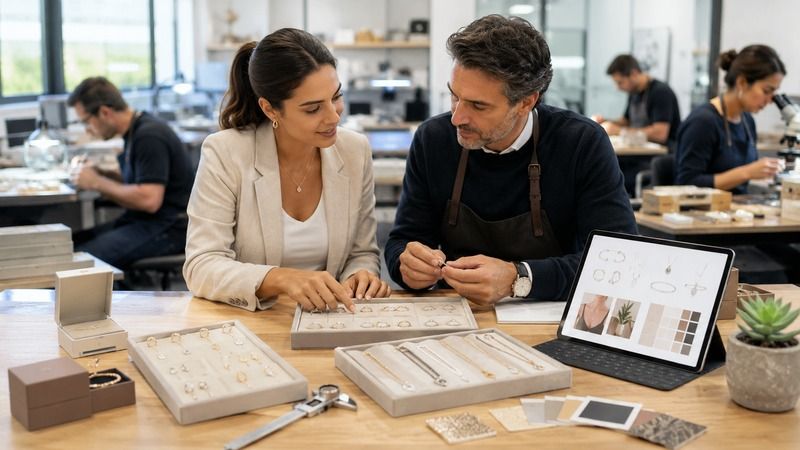
Finding the right jewelry manufacturer can be difficult for a small business because low order quantities, product quality, customization, and cash flow all need to work together. A factory that is suitable for a large retailer may not be flexible enough for a startup testing its first necklace, ring, bracelet, or earring collection.The best jewelry manufacturers for small businesses combine manageable order quantities with clear specifications, sampling, reliable quality control, and enough production capacity to support future growth.This guide explains how to compare suppliers, prepare a useful RFQ, reduce sourcing risk, and choose a manufacturing partner that fits both your current order and long-term brand plans.
Quick Answer: What Manufacturer Is Best for Small Businesses?
The best jewelry manufacturer for a small business is not automatically the supplier with the lowest MOQ or lowest unit price.Look for manageable order quantities, sample support, OEM or ODM capability, clear metal and plating specifications, private-label options, quality control, and the ability to reproduce approved designs when you reorder.
A startup testing 50 or 100 pieces may have different priorities from a growing Shopify brand ordering several thousand pieces.Choose the manufacturer according to your product, customization level, target market, budget, and expected growth rather than one headline MOQ.
Compare Jewelry Manufacturers for Small Businesses
Different jewelry manufacturers serve different business models, so comparing them by company size alone is rarely useful.A better approach is to match the manufacturer's production model with the type of collection you want to build.
| Manufacturer Type | Best For | MOQ Flexibility | Customization | Sampling | Main Consideration |
|---|---|---|---|---|---|
| Ready-Made Wholesaler | Fast market testing | Usually flexible | Low | Limited | Product differentiation |
| Private-Label Supplier | Boutique and online brands | Moderate | Medium | Varies | Packaging and branding |
| Fine Jewelry Workshop | Premium collections | Project-based | High | Usually available | Higher development cost |
| Small-Batch Factory | Startups | Higher flexibility | Medium-High | Important | Reorder consistency |
| OEM Manufacturer | Original brand designs | Project-based | High | Essential | Technical specifications |
| ODM Manufacturer | Faster product development | Often flexible | Medium-High | Available | Design exclusivity |
| Missjeweler | Growing custom jewelry brands | Project-based | OEM/ODM | Available | Specifications and production planning |
MOQ should always be verified with the manufacturer because it can depend on the design, material, plating, stone, color, and size combination.A quoted “100-piece MOQ” means little until you know whether it applies to the whole order or to every individual SKU.
How We Evaluate Jewelry Manufacturers for Small Businesses
A useful supplier comparison should look beyond attractive product photos and price lists. Small businesses need to know whether a manufacturer can turn a design into a repeatable product without creating unnecessary inventory, quality, or communication risk.
MOQ and Small-Batch Flexibility
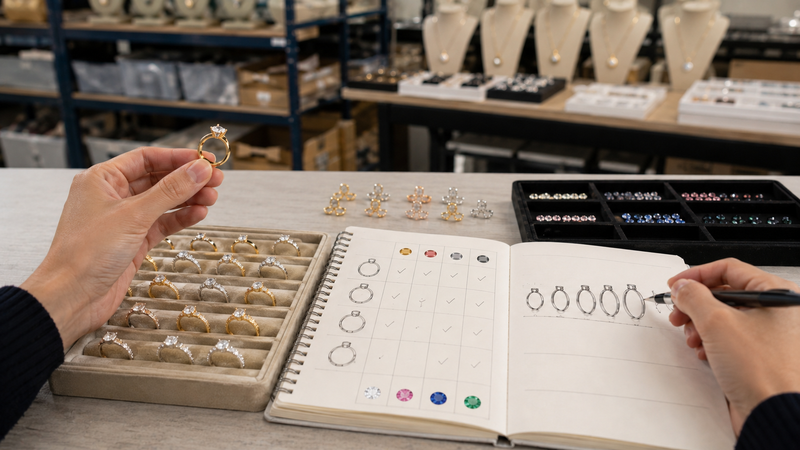
MOQ affects how much cash a business must commit before knowing whether a product will sell.For a small jewelry brand, the most useful MOQ is one that allows realistic market testing without making the unit cost or production process unsustainable.
Ask whether the minimum applies per design, plating color, ring size, stone color, or total purchase order. A low total MOQ can become expensive quickly if five sizes and three finishes must each meet separate minimum quantities.
Customization Capability
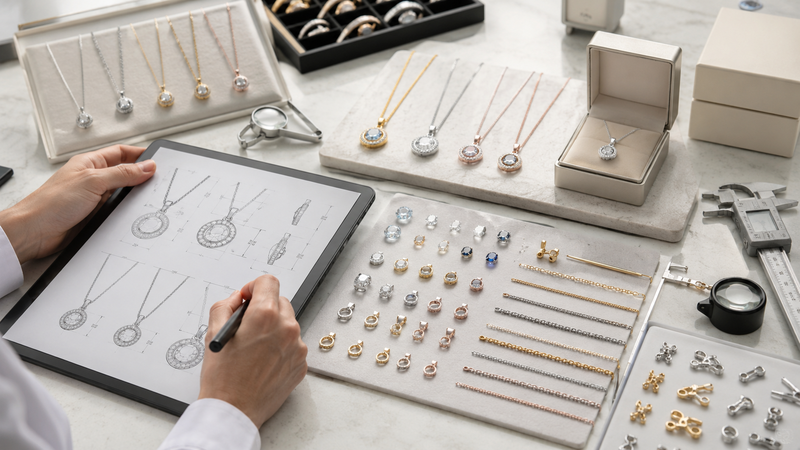
Jewelry customization can range from changing the plating color of an existing pendant to developing a completely new design from a sketch or CAD file.Before choosing a factory, define whether you need simple ODM modification or full OEM development.
Useful customization options may include dimensions, metal, stone type, stone size, logo placement, plating color, surface texture, clasp, chain length, and packaging. The more original the product, the more important technical communication becomes.
Sampling and Prototype Support
Small brands should normally avoid going from an inspiration photo directly into a large production order.A structured sample process allows both buyer and manufacturer to confirm what the approved product is supposed to look and feel like.
The process may include CAD approval, material confirmation, prototype production, sample review, revisions, and a final approved reference. Keeping that reference makes later QC and repeat orders much easier to discuss.
Materials and Finishes
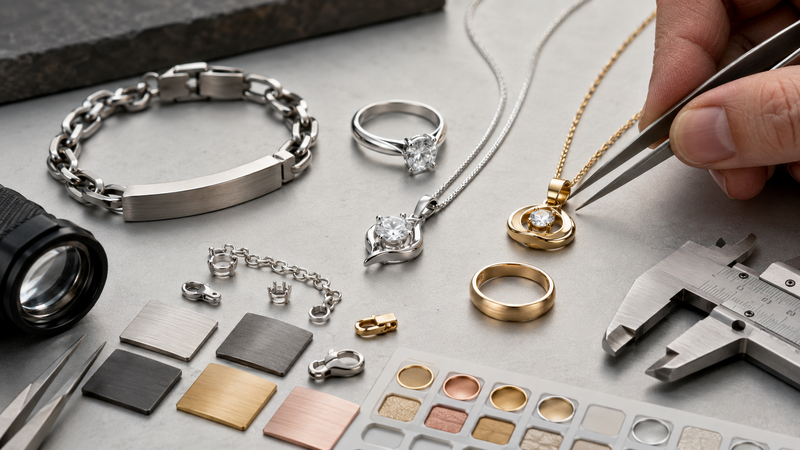
A manufacturer's material list should be treated as the beginning of the specification, not the complete specification. “Sterling silver,” “stainless steel,” or “18K gold plated” can still leave important production questions unanswered.
Small businesses should confirm the base metal, alloy or grade where relevant, stone, plating process, target color, thickness requirement, surface finish, and critical components.TheFTC Jewelry Guidesare a useful reference for understanding how jewelry materials and precious-metal representations are described in the U.S. market.
Quality Control
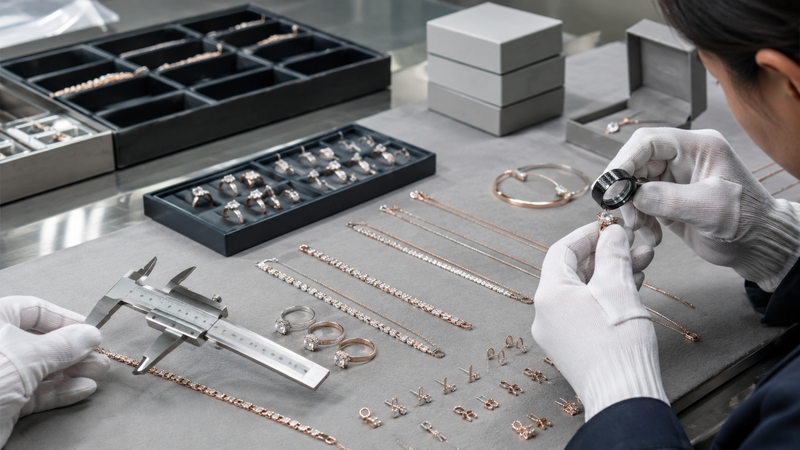
Jewelry QC should be connected to measurable product requirements instead of a general promise of “high quality.”Dimensions, stone setting, plating appearance, polishing, components, logo, packaging, and workmanship should all be checked against the approved specification.
For growing brands, repeatability matters as much as the first sample. A beautiful prototype does not help if the second and third production runs gradually change in color, dimensions, stone placement, or finishing.
Which Manufacturer Fits Your Jewelry Business?
Different businesses need different supplier strengths.The best manufacturing partner is the one that solves the constraints of your current business model without blocking your next stage of growth.
Jewelry Startups
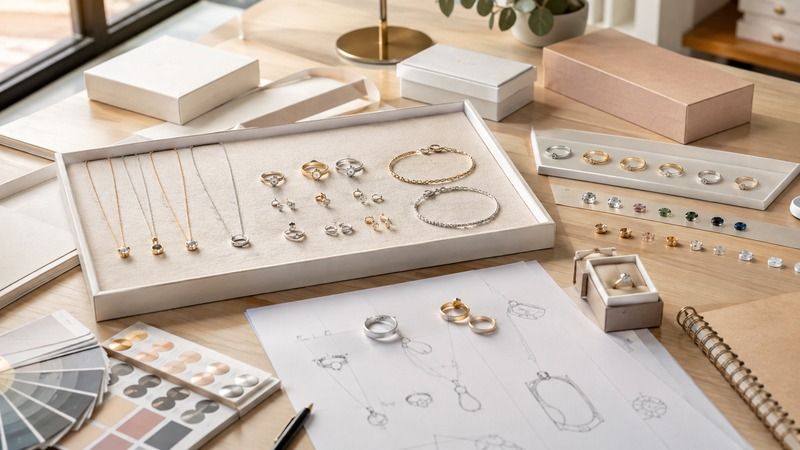
Startups usually benefit from manageable order quantities, fewer initial SKUs, clear samples, and simple customization. Developing ten completely original collections before validating demand can tie up cash that may be more useful for marketing and replenishment.
A practical starting point is a focused collection with clearly defined products, materials, colors, and target prices.Once sales data becomes available, successful SKUs can be expanded into new sizes, stones, finishes, or matching products.
Shopify and Online Jewelry Brands
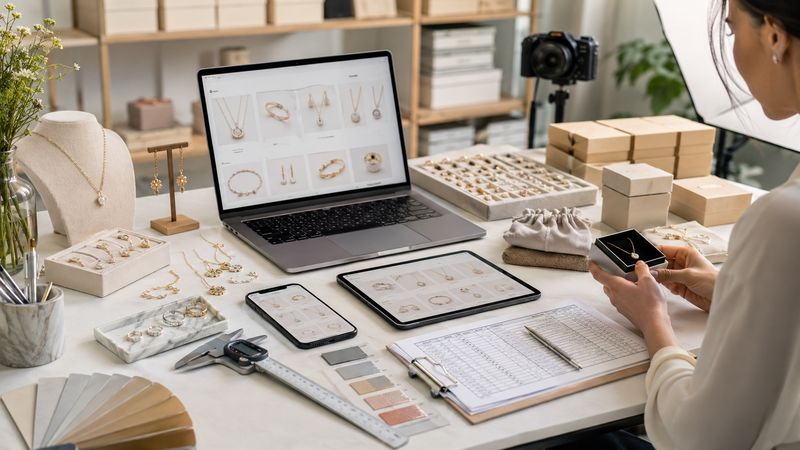
Online brands often need stronger repeat-order consistency because bestselling products can suddenly require replenishment. Packaging, product photography consistency, size accuracy, and predictable color are also important because customers cannot inspect the item before purchasing.
Ask whether the factory keeps production records for repeat orders and how changes in materials or processes are communicated.This becomes increasingly important when the brand begins selling through multiple online channels.
Independent Jewelry Designers
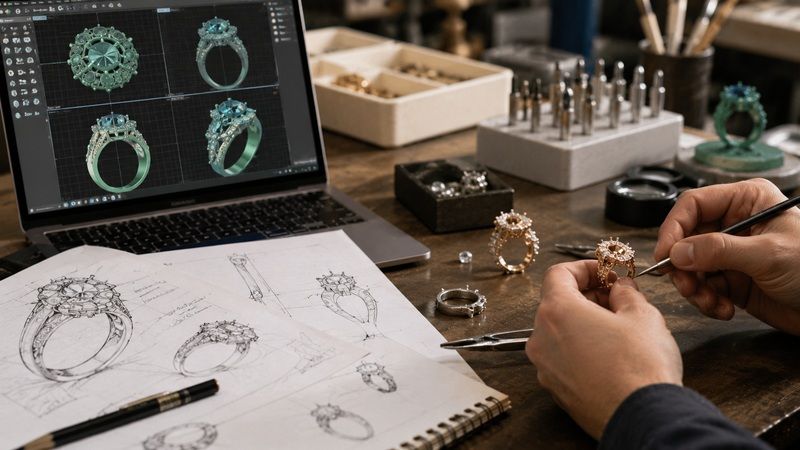
Designers typically require stronger CAD, prototype, mold, stone-setting, and finishing capabilities. Small details that appear simple in a sketch may create production problems when translated into metal.
A manufacturer that can explain manufacturability before sampling can help reduce unnecessary revisions.The goal is not to change the creative direction, but to make sure the final construction can be produced consistently.
Boutique Retailers
Boutiques may prefer ready-made or semi-custom collections because speed and assortment can matter more than full product originality. Private labeling can add brand identity without requiring the retailer to develop every design from zero.
Before ordering, check whether the same products will remain available for future replenishment and whether packaging has a separate MOQ.A low jewelry MOQ does not always mean a low custom-box or pouch MOQ.
Low MOQ vs Small-Batch Jewelry Manufacturing
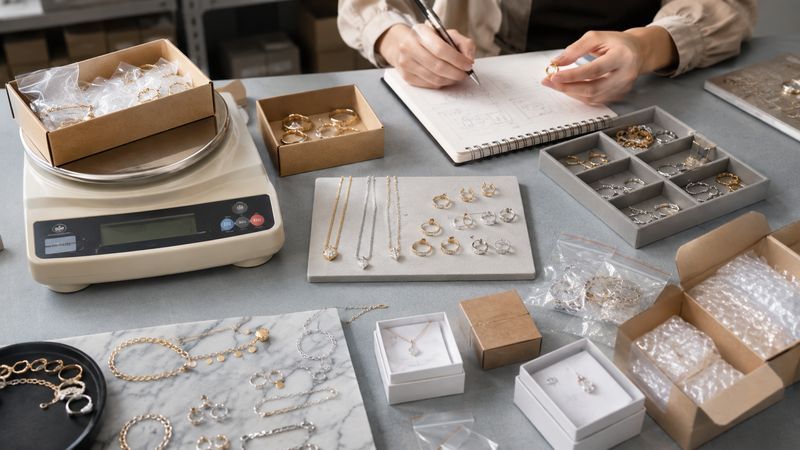
Low MOQ and small-batch manufacturingare related, but they are not exactly the same thing. A supplier may accept a small quantity while offering very limited customization, while another factory may specialize in controlled small production after a more detailed development process.
Low MOQ does not automatically mean low sourcing risk.Poor material specifications, inconsistent plating, weak QC, or unreliable reorders can create more cost than the inventory saved by ordering fewer pieces.
Small businesses should compare MOQ together with unit cost, sample fees, tooling, packaging, expected defect handling, and replenishment ability. The better question is not simply “Who has the lowest MOQ?” but “What quantity allows us to test this product under a production process we can repeat?”
OEM vs ODM Jewelry Manufacturing for Small Brands
OEM and ODM are both useful, but they solve different sourcing problems.Choosing the right model depends mainly on how much of the design and product specification your brand already owns.
OEM Jewelry Manufacturing
OEM is generally more suitable when the brand has its own sketches, CAD files, dimensions, reference samples, or detailed technical requirements. The manufacturer focuses on translating those specifications into production.
OEM offers greater product differentiation but normally requires more development work.Brands should be prepared to confirm construction, materials, stones, surface treatment, logo placement, tolerances, and sample approval before bulk production.
ODM Jewelry Manufacturing
ODM is useful when a brand wants to start from an existing manufacturing concept and adjust selected details. Changes can include metal, stone, plating color, chain, logo, engraving, or packaging.
ODM can reduce development time and allow small businesses to test a market faster.However, buyers should ask which design elements can actually be customized and whether exclusivity is available if that matters to the brand.
How Much Does Jewelry Manufacturing Cost?
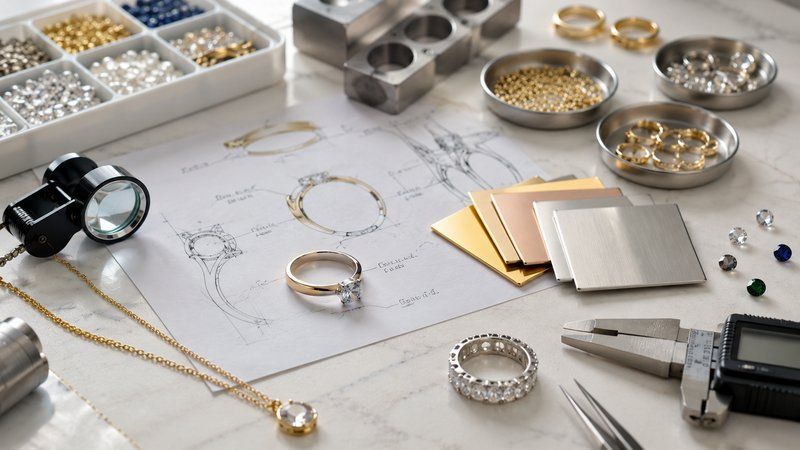
There is no reliable universal cost per piece because two visually similar jewelry designs can have very different production requirements.Manufacturing cost is usually a combination of material, weight, stones, construction, finishing, development, quantity, packaging, testing, and logistics.
Base metal is one of the largest variables. Brass, stainless steel, sterling silver, and solid gold have different material costs and production considerations, while the weight of the finished piece also affects the final calculation.
Stones add another layer of variation because cost depends on type, size, quantity, grade, cutting, and setting method. For gemstone terminology and basic gemological information, buyers can reference theGIA Gem Encyclopediawhen preparing product requirements.
Plating should also be quoted as a production specification rather than just a color name.Gold tone, karat color, plating process, target thickness, underlayer, top coating, and measurement expectations can all affect cost and performance.
Development charges may include CAD, molds, prototypes, or samples, while private-label packaging can introduce separate setup and quantity requirements. Small businesses should therefore compare the finished production cost instead of choosing a supplier only from the first quoted unit price.
What to Ask Before Choosing a Jewelry Manufacturer
A clear RFQ makes supplier comparison easier and reduces the number of assumptions made during production.The more precise the information supplied before quoting, the more meaningful the quotation becomes.
Regulatory requirements should be discussed according to the destination market and product construction. For European markets, buyers can use theEuropean Chemicals Agency REACH restrictions informationand theEuropean Commission REACH overviewas authoritative starting points rather than relying only on a supplier's marketing claim.
How Jewelry Sampling Should Work Before Bulk Orders
A practical sampling process begins with a design brief that identifies what the product is, who it is for, and what must be controlled.The buyer and manufacturer should then translate that brief into specifications that can be checked rather than relying only on visual references.
A common workflow is Design Brief → CAD or Drawing → Material Confirmation → Prototype or Sample → Revision → Approved Sample → Bulk Production. Not every project needs every step, but skipping important approvals can make later disputes much harder to resolve.
CAD approval should focus on dimensions, proportions, stone placement, construction, logo position, and functional parts.Material confirmation should be separate because a CAD file normally cannot define all alloy, plating, stone, and finishing requirements by itself.
Once the finished sample is approved, keep records of the agreed specifications and, where practical, retain an approved reference sample. That gives both sides a clearer standard for bulk production and future reorders.
How to Check Jewelry Quality Before Bulk Production
Visual appearance is important, but it should not be the only acceptance criterion.A useful QC plan checks the characteristics that could affect appearance, function, durability, customer complaints, or regulatory requirements.
Dimensions should be checked against the agreed tolerances, especially for rings, fitted components, stone seats, chains, and matching sets. Stone setting should be inspected for looseness, alignment, missing stones, uneven spacing, or visible damage.
Surface inspection can cover scratches, polishing, sharp edges, burrs, solder areas, texture, and finish consistency.Plating inspection should focus on agreed color, coverage, appearance, and thickness requirements where thickness has been specified.
Small components deserve particular attention because clasps, jump rings, earring posts, backs, hinges, and chains regularly contact the customer or carry mechanical load. A well-finished pendant does not compensate for a weak clasp or inconsistent earring post.
Common Jewelry Manufacturing Mistakes Small Businesses Make
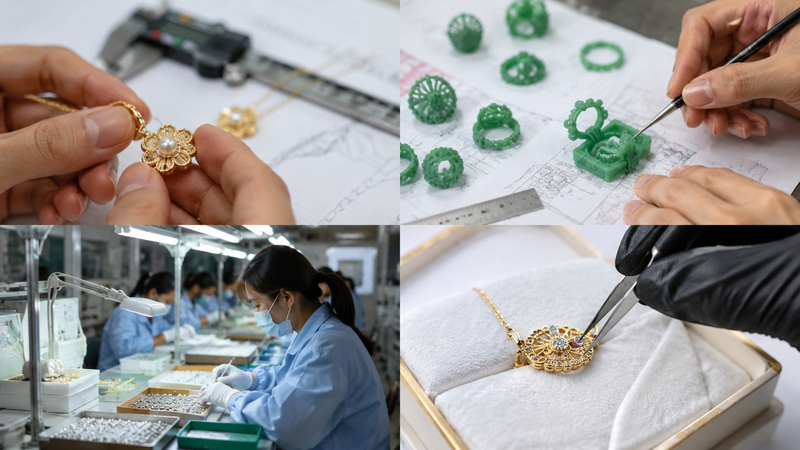
One common mistake is choosing a supplier only because the MOQ is lower.A smaller order reduces inventory exposure, but it does not compensate for vague specifications, weak QC, or unreliable repeat production.
Another mistake is comparing only the unit price while ignoring sample costs, molds, tooling, packaging, testing, freight, duties, and defect handling. A slightly higher unit price can be more economical when the overall production process is clearer and more predictable.
Ordering bulk production before approving a representative sample also creates unnecessary risk.For a custom collection, sample approval gives both parties a reference for dimensions, stone setting, plating, finish, logo, and workmanship.
Small brands should also avoid vague descriptions such as “18K gold plated brass necklace.” A useful production specification should clarify the base material, plating process, target color, thickness requirement, finish, stone, dimensions, and important components.
Red Flags When Choosing a Jewelry Manufacturer
Supplier communication before production often reveals how structured the manufacturing process will be later.Repeatedly vague answers about materials, plating, MOQ, sampling, or inspection should be treated as a sourcing risk rather than a small communication issue.
Other warning signs include quotations that are dramatically cheaper without a clear specification basis, constantly changing MOQ requirements, no defined sample approval process, and an inability to explain how bulk production will be compared with the approved sample.
A professional supplier should also be willing to discuss realistic lead times, production limitations, testing requirements, and defect handling.Reliable manufacturing does not mean promising that every request is easy; it means explaining what can be produced, how it will be controlled, and where compromises may be necessary.
How Small Jewelry Brands Can Scale Production
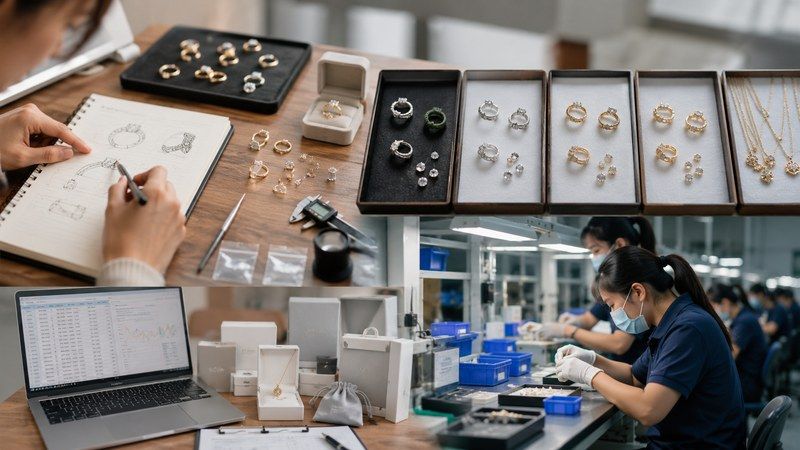
A healthy sourcing relationship does not need to begin with a huge order.Many small brands can reduce risk by moving through prototype, sample, test order, reorder, collection expansion, and larger production in stages.
Once a product proves demand, the brand can add complementary sizes, stones, finishes, or products rather than replacing the entire collection. This allows inventory decisions to follow actual sales data while keeping successful specifications stable.
Scaling also changes what matters in supplier selection.At 100 pieces, flexibility may dominate the decision; at 3,000 pieces, consistency, capacity, QC records, packaging coordination, and replenishment planning become much more important.
The best long-term manufacturer is therefore not simply the factory that accepts your smallest first order. It is the supplier that can support experimentation today and repeatable production when your winning products begin to grow.
Why Missjeweler Fits Growing Jewelry Businesses
Missjewelerworks with jewelry brands, retailers, wholesalers, and private-label businesses that need more than ready-made products.Its OEM and ODM approach allows buyers to discuss product design, dimensions, stones, materials, plating, finishes, logos, packaging, and production requirements as part of one sourcing process.
Depending on the collection, projects can involve materials such as sterling silver, stainless steel, brass, gold, moissanite, and other stone options. The important B2B advantage is not simply having many materials available, but being able to define the construction before production so the quotation and sample are based on clearer requirements.
For custom projects, a structured path from requirement review and design confirmation to sampling, approval, bulk production, inspection, and shipment helps reduce uncertainty.This is especially valuable for small brands that want to test products first and then build repeat orders around proven SKUs.
Missjeweler can also support branding elements such as logos and private-label packaging according to project requirements. Rather than treating “custom jewelry” as one broad service, buyers can prepare an RFQ covering product dimensions, material, stones, plating, quantity, packaging, destination market, and QC expectations before sampling.
Conclusion
Choosing the right jewelry manufacturer means balancing MOQ, customization, quality control, and scalability.For growing brands, Missjeweler offers a practical option for OEM/ODM development, sampling, and repeatable bulk production.
Request a Jewelry Manufacturing Quote
Send Missjeweler your design, material, plating, quantity, logo, and packaging requirements to discuss a sample and production plan for your next collection.
Frequently Asked Questions
How do I find a jewelry manufacturer for my small business?
Look for manufacturers that support manageable MOQs, samples, clear specifications, customization, QC, and repeat orders.Compare the complete production process rather than price alone.
What is a good MOQ for a small jewelry business?
There is no universal ideal MOQ because it depends on material, design, sizes, stones, plating, and customization.Always confirm whether the MOQ applies per SKU or to the total order.
Can small businesses create fully custom jewelry?
Yes, many OEM manufacturers can work from sketches, CAD files, technical drawings, or reference samples.Development costs and minimum quantities depend on the complexity of the project.
Should I order a jewelry sample before bulk production?
Yes, especially for a custom product.A finished sample helps confirm dimensions, materials, stones, plating, finish, logo, and overall workmanship before bulk production.
What should I send a jewelry manufacturer for a quote?
Provide the product type, dimensions, material, stones, plating, quantity, logo, packaging, destination market, and testing or QC requirements.A detailed RFQ usually produces a more useful and comparable quotation.